Not close, just close enough for the cameras
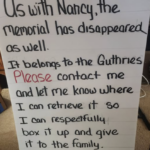
The memorial is gone now. Whatever was there, sunflowers, river rocks, the kind of makeshift shrine that accumulates when a community doesn’t know what else to do with its helplessness, someone took it down. What’s left is a sandwich board propped in the dirt in red and black marker, addressing the absence.
“As with Nancy, the memorial has disappeared as well. It belongs to the Guthries. Please contact me and let me know where I can retrieve it so I can respectfully box it up and give it to the family. Contact info is on the back. Thank you.”
Contact info is on the back. Of course it is.
The sign belongs to Lauren Serpa. The same Lauren Serpa who, on May 12th, got on her own Facebook page and typed the following: I am not a close friend of Nancy’s. I haven’t seen her in years or spoken to her in quite awhile. I have never had the pleasure of meeting Annie, Cameron and Savannah. I consider Nancy a friend for what she did for me years ago. It is not fair to the family that I am represented as someone close.
Years ago. Never met the kids. Not fair to the family.
She wrote that on May 12th. After weeks of doing the exact thing she now acknowledges is not fair to the family.
Because here is what the timeline actually looks like.
On April 15th, Serpa posted a warning about misinformation. She told her followers that fake news stories were everywhere, that if something wasn’t breaking on a major news station or coming from the Sheriff’s Department or the FBI, take it with a grain of salt. She referenced police presence being beefed up around Nancy’s house and Annie’s house. She spoke with the casual authority of someone who knows things. Someone with access. Someone close enough to the situation to be sorting signal from noise on behalf of concerned strangers.
The next day, April 16th, she posted again. This time she had something to share. A medium from the UK had, apparently, communicated with Nancy and reported that Nancy said she was taken into the mountains, tied to a rock, and pushed into a lake. Serpa said she didn’t know if the FBI had gone to Rose Canyon Lake but maybe they should take a boat and side sonar equipment and check the bottom. She closed with a disclaimer that she was not trying to put conspiracy theory stuff out there, as she was putting conspiracy theory stuff out there.
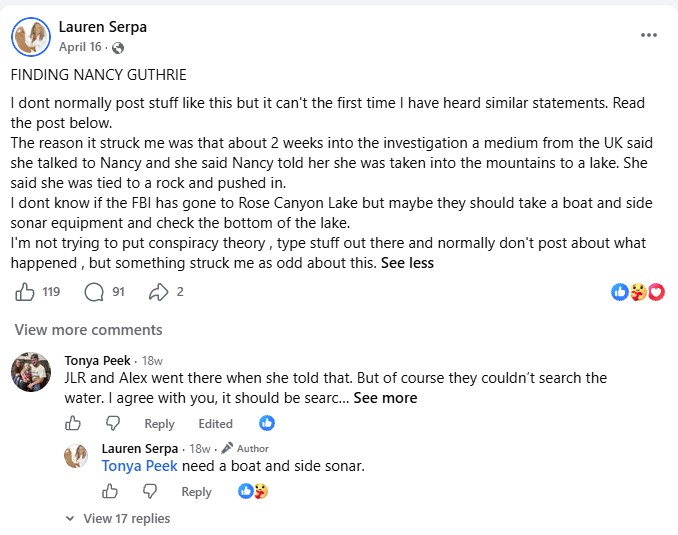
A UK medium. A psychic. A person who claims to have spoken to a missing 84-year-old woman via mechanisms that have never once produced a verified result in the history of criminal investigation. That is the source Serpa chose to amplify, with 118 likes and 91 comments beneath it, to a following that had come to understand her as someone adjacent to real information.
And then on May 12th, three weeks after all of that, she clarified that she is not a close friend and has never met the family.
So let’s establish what we actually know about the origin of this relationship, because the Irish Star was kind enough to report it and Serpa was kind enough to describe it in detail. In 2015, Serpa was at a farmer’s market. She was grieving her fiancé. She pulled over. She was having a hard time. And a woman named Nancy, a stranger, came over and spoke to her for twenty-five minutes. Offered comfort. Talked about the power of prayer. Told her to remember to breathe.
That’s it.
That is the relationship. A twenty-five minute conversation at a farmer’s market in 2015. A kind word from a stranger during a hard moment. It is a genuinely sweet story. Nancy Guthrie sounds, from every account, like exactly the kind of person who would do that. And I don’t want to take anything away from what that moment meant to Serpa, because grief is real and kindness lands hard when you’re in it.
But a twenty-five minute conversation eleven years ago is not a friendship. It is not insider access. It is not the standing required to tell thousands of people which news sources to trust about a missing woman’s case, or to suggest that federal investigators should drag a specific lake because a psychic in the United Kingdom said so.
And it is certainly not the basis for positioning yourself, weeks later, as the person who will personally deliver a missing woman’s memorial items to children you have never met and cannot reach.
I’ll box it up. I’ll give it to them.
She wrote that on a sign. After writing on Facebook that she has never had the pleasure of meeting Annie, Cameron, or Savannah. These documents exist simultaneously, authored by the same person, and neither one has been retracted.
And the screenshots make this worse, not better, because they show this was not one clean misunderstanding. This was not simply one reporter getting carried away with the word friend, or one article overstating a relationship. Lauren’s own words move around depending on what she appears to need them to do in the moment. Nancy is a friend when proximity gives her standing. Nancy is not a close friend when scrutiny shows up. In one version, they always kept in touch. In another, they talked, but not often. Then, by May 12th, she has not seen Nancy in years and has not spoken to her in quite a while.
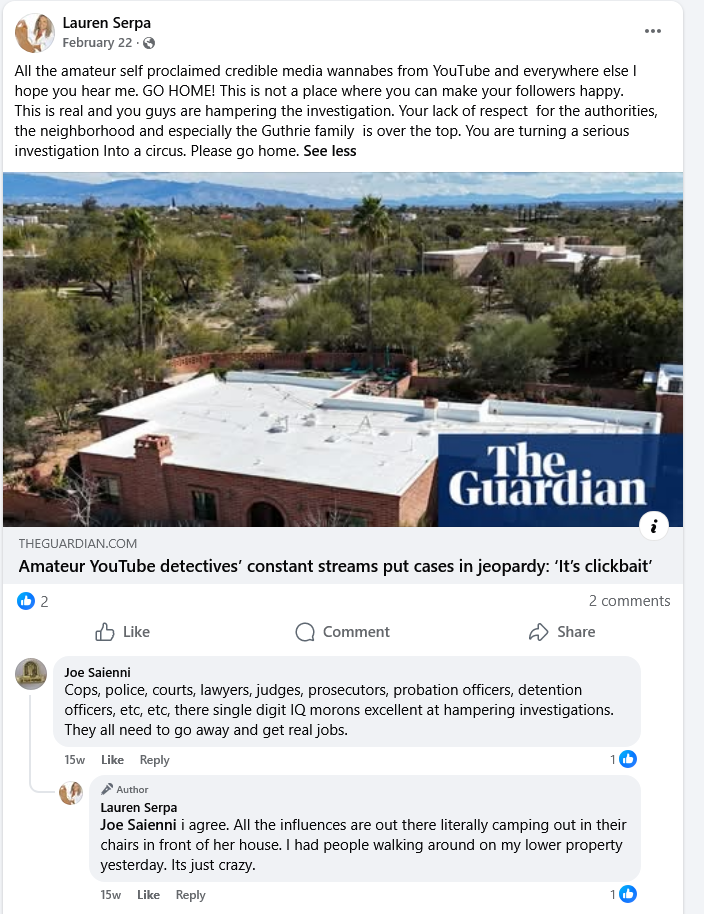
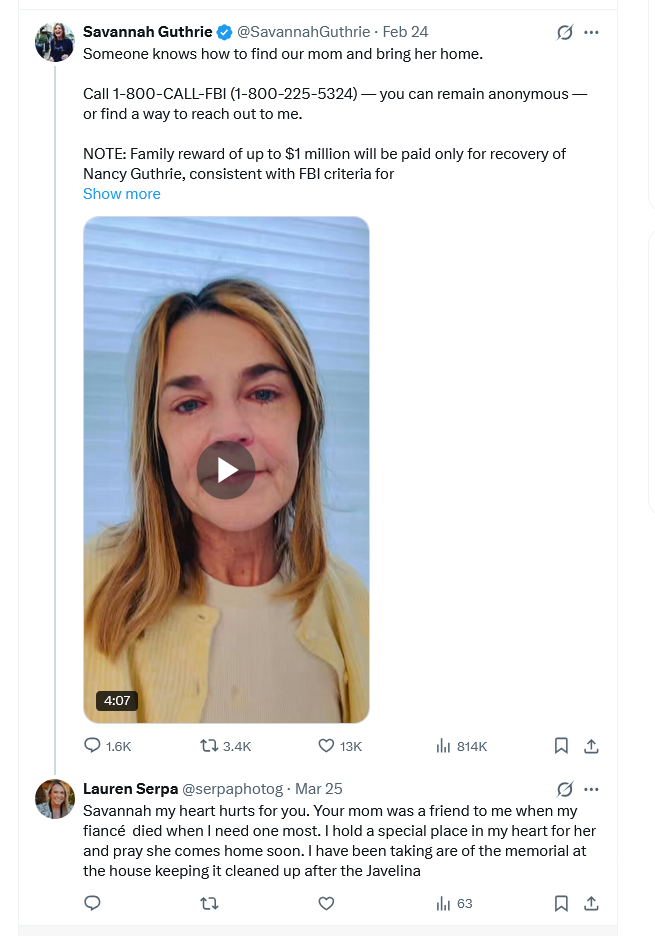
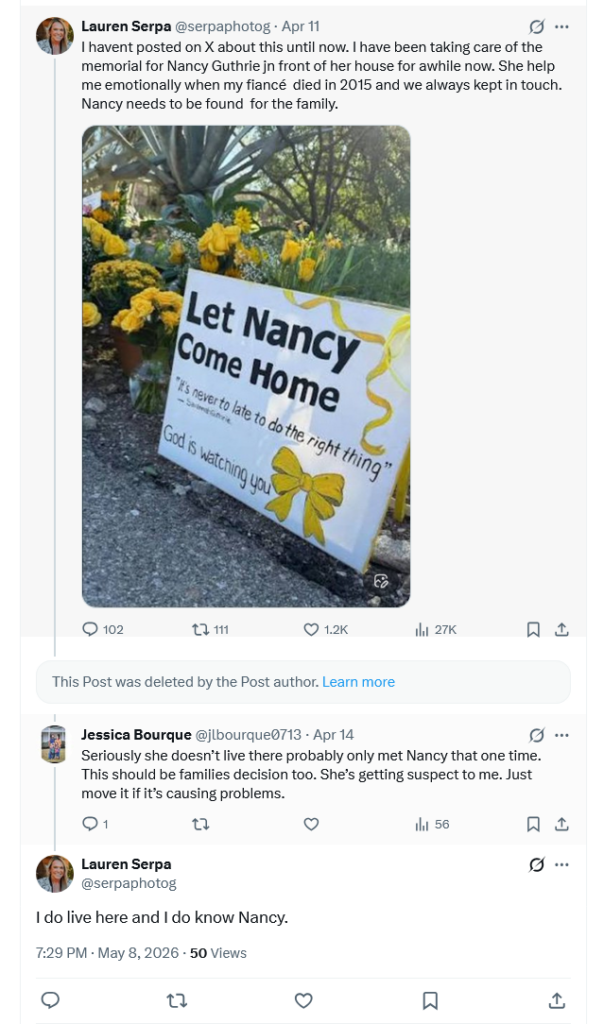
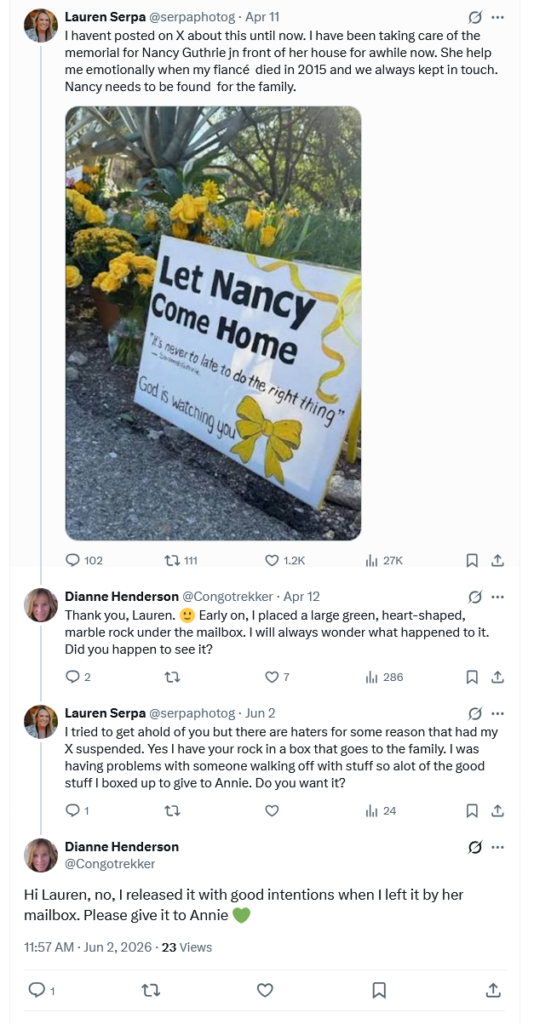
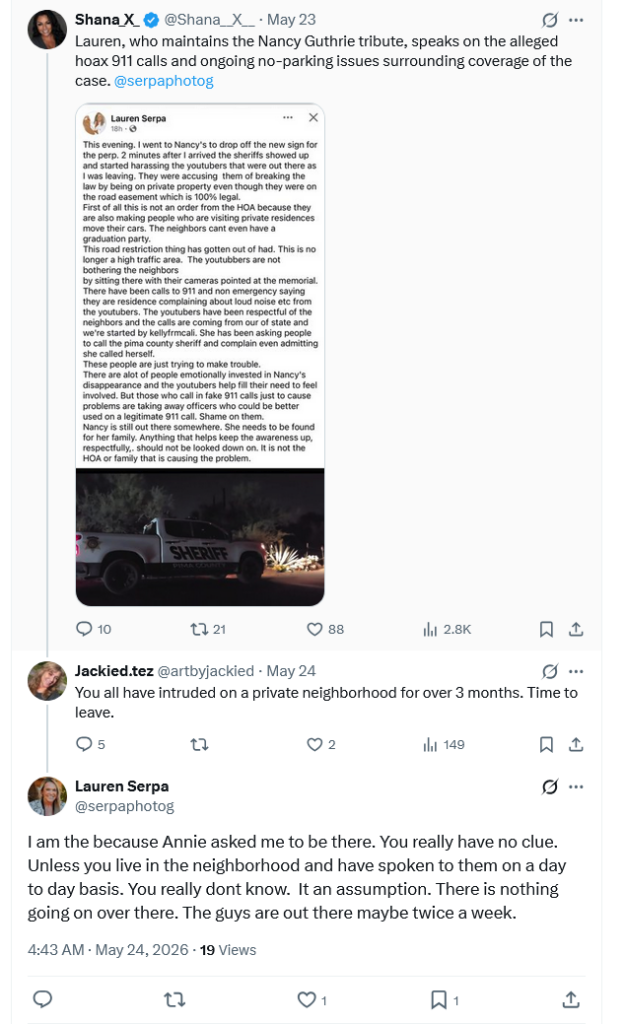
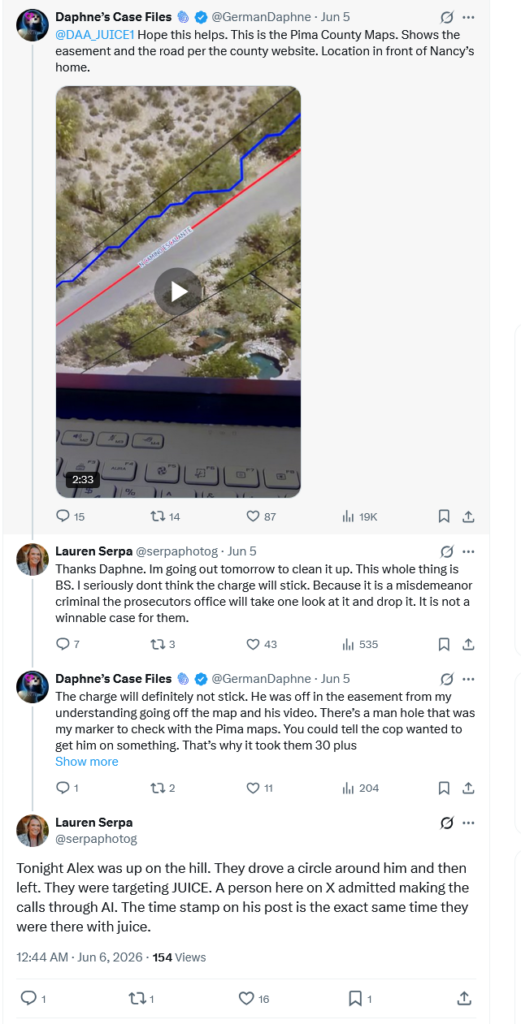
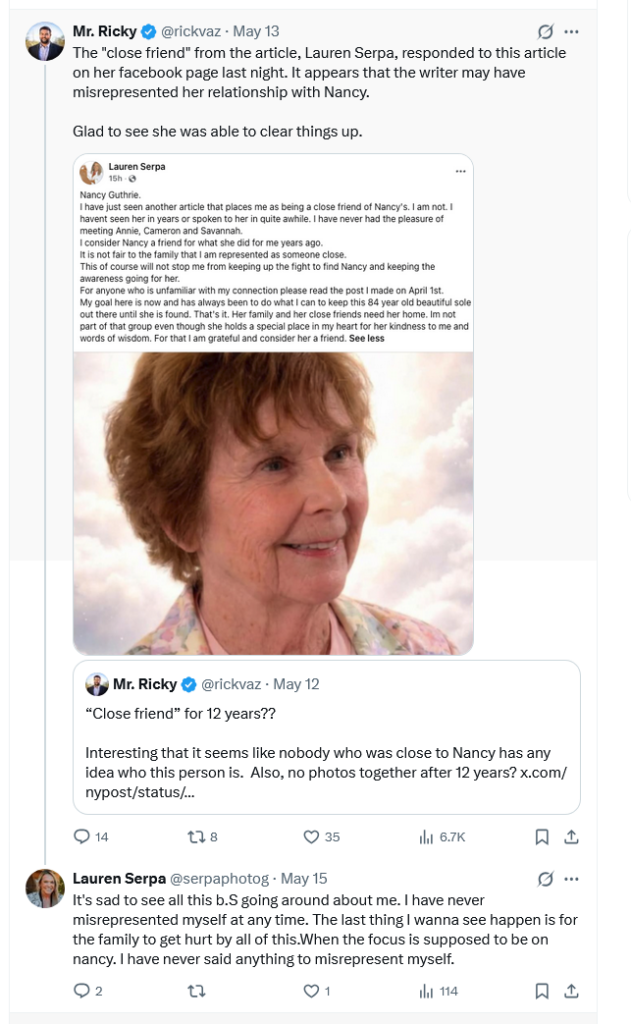
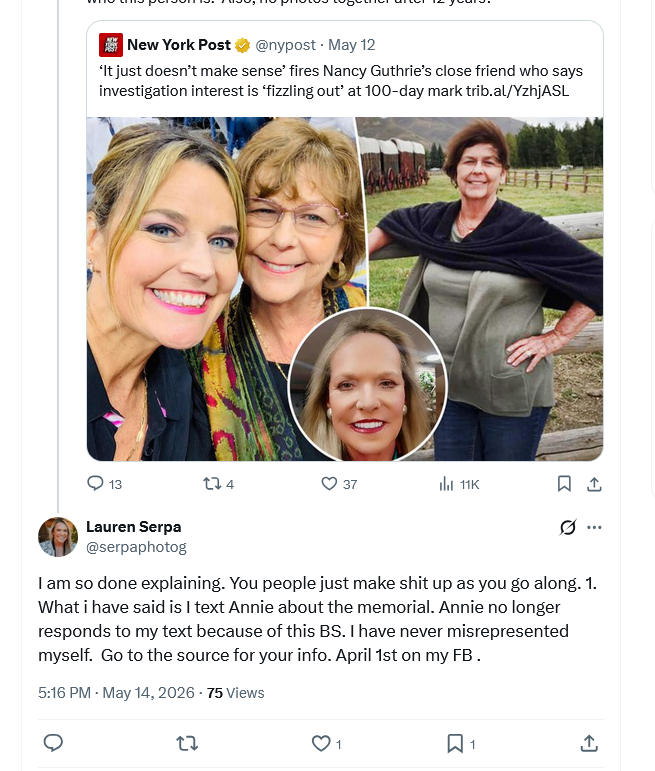
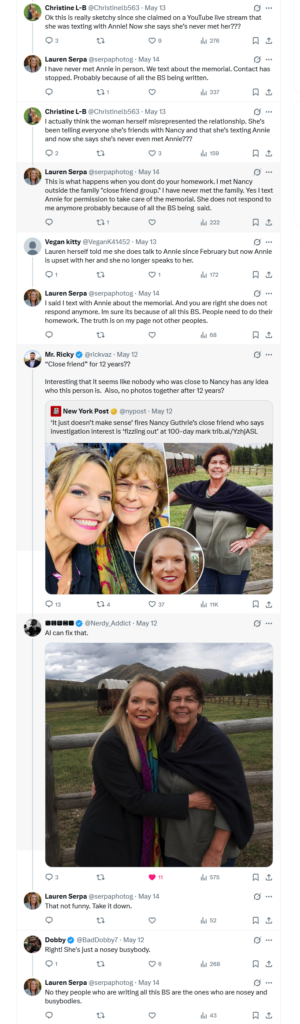
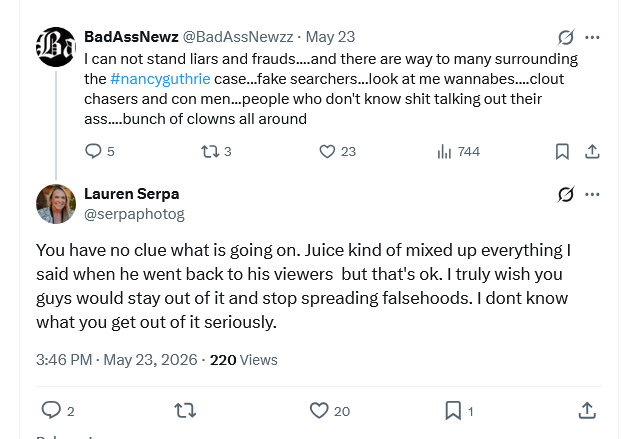
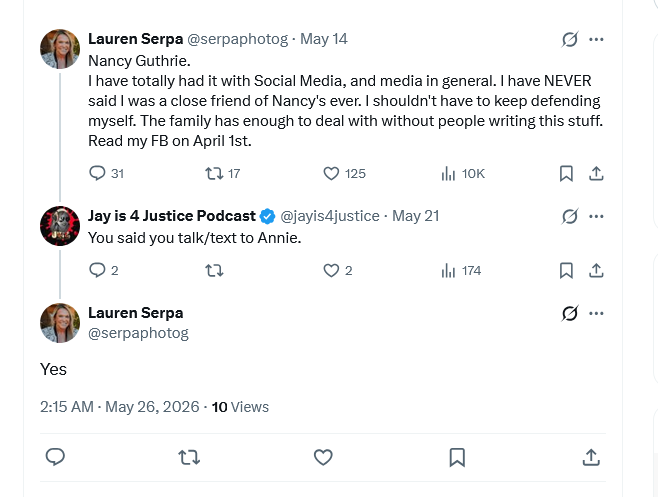
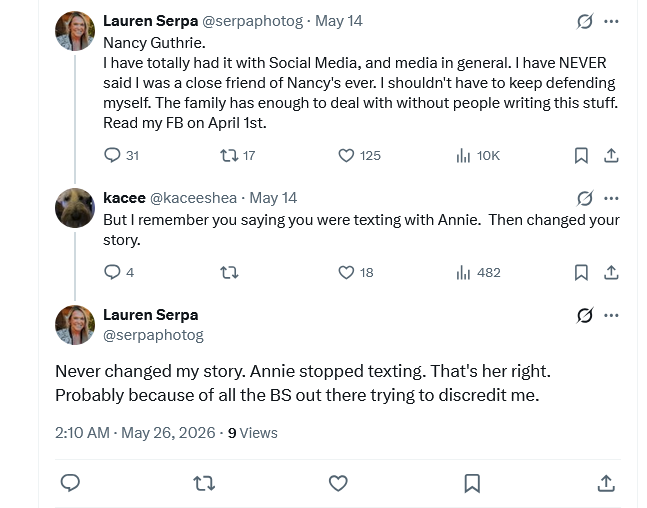
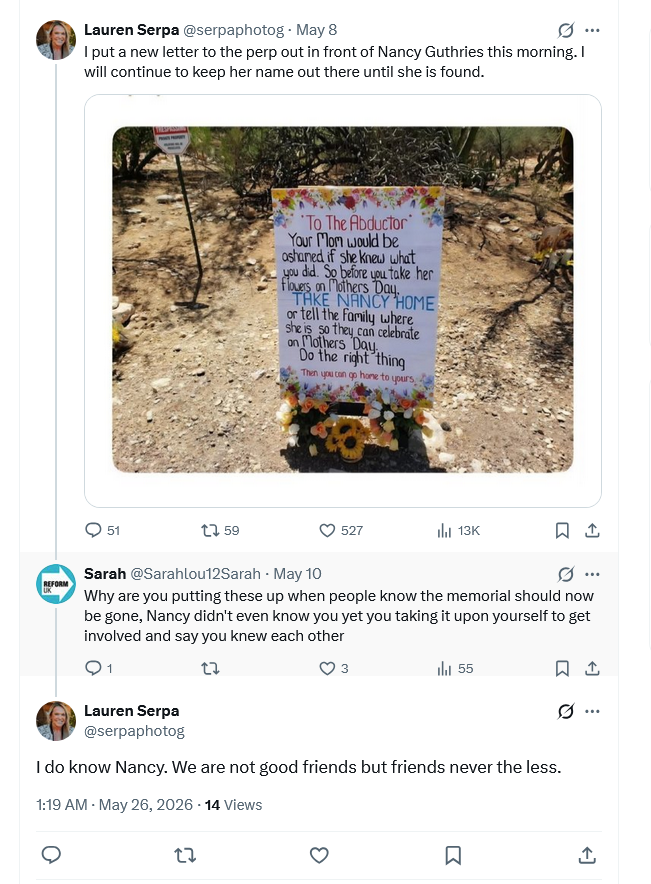
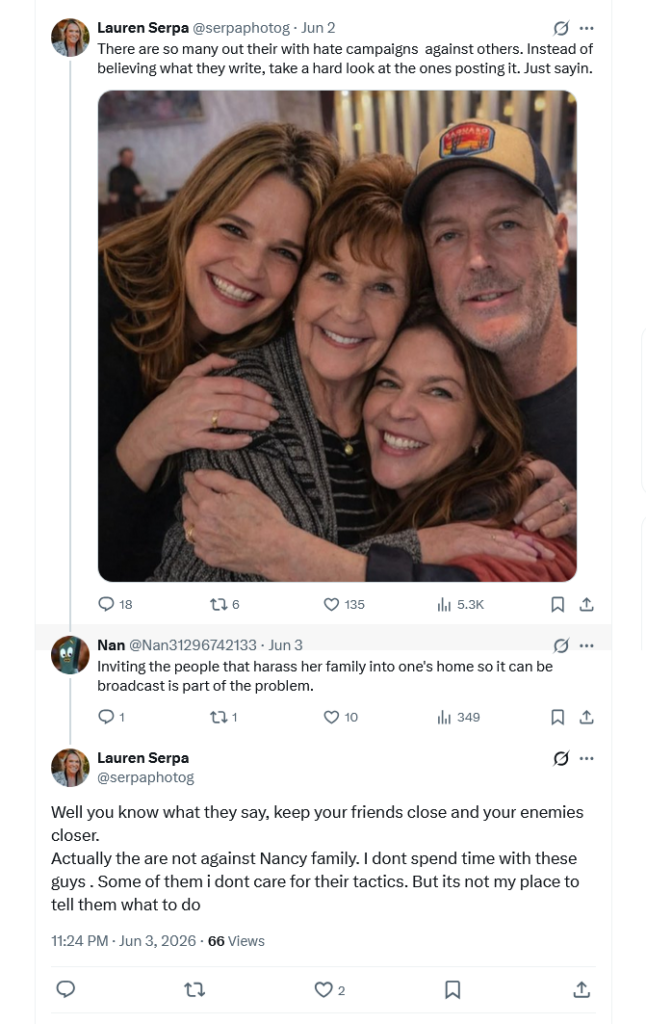
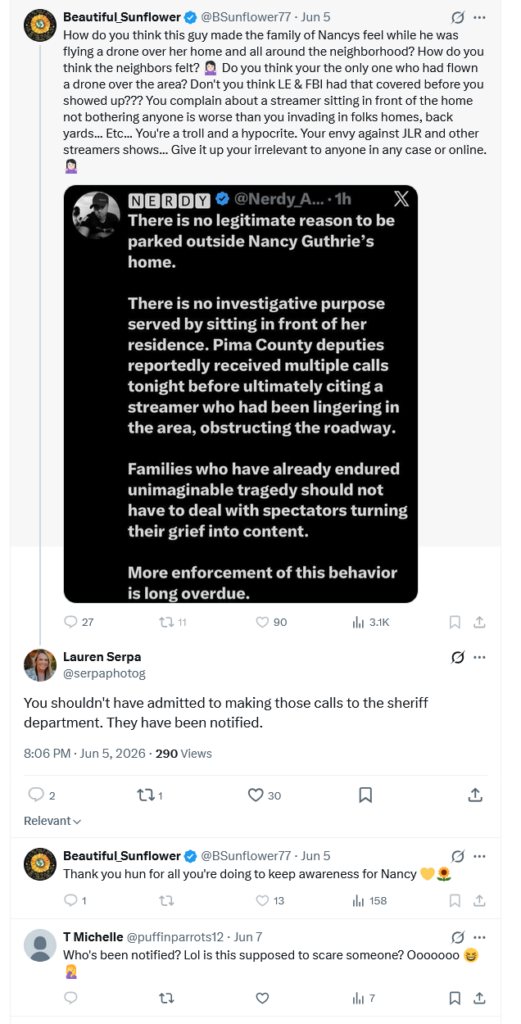
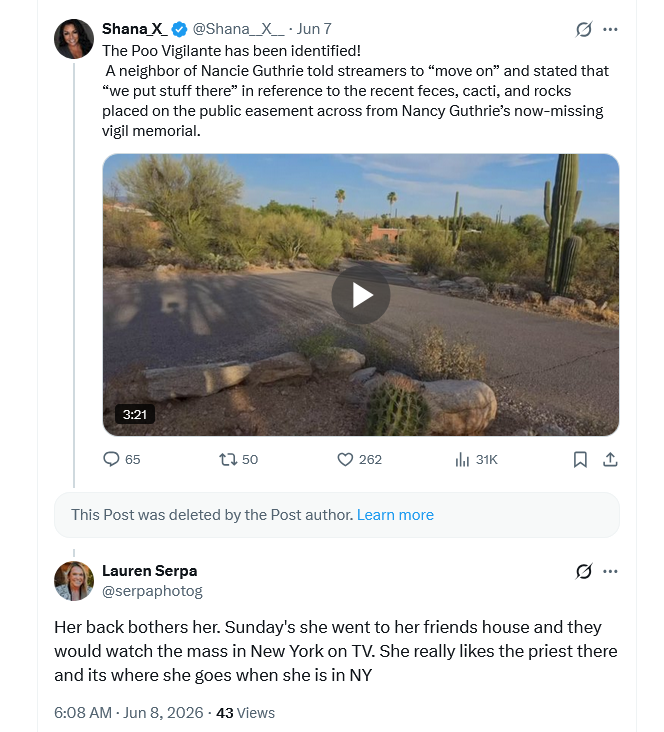
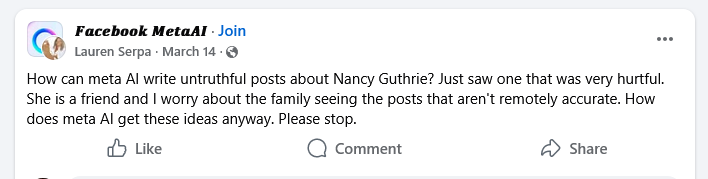
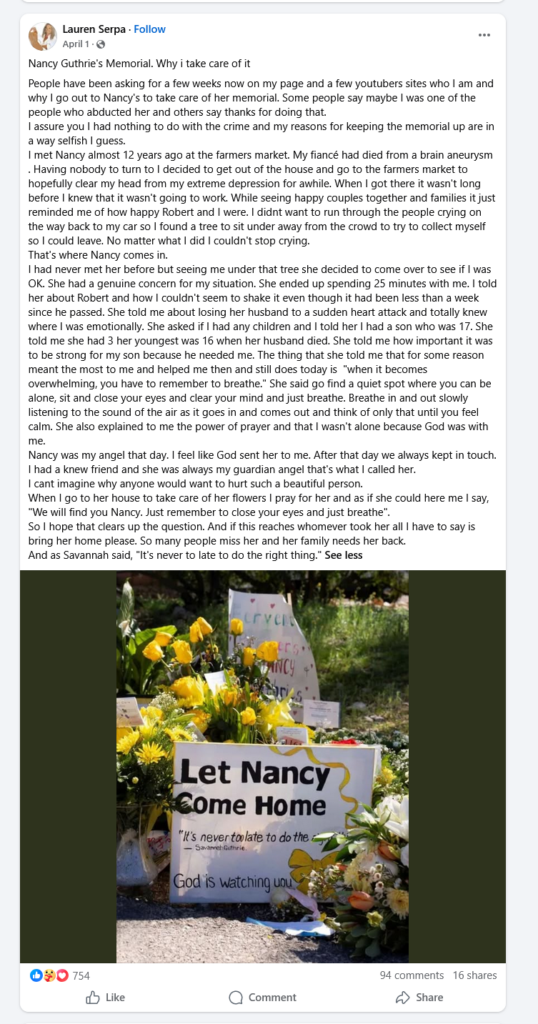
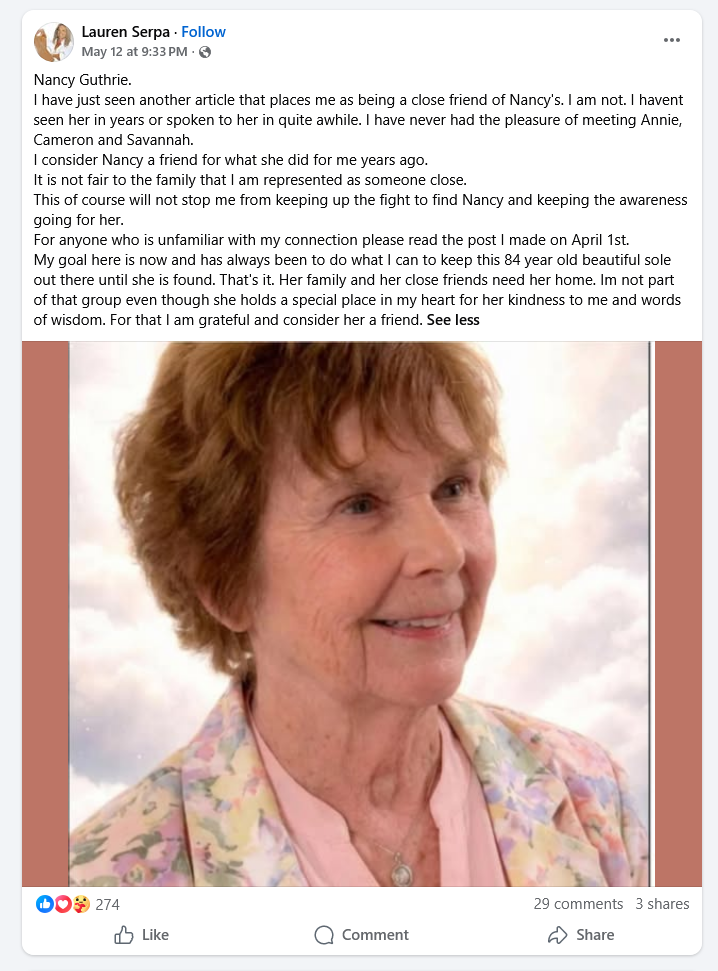
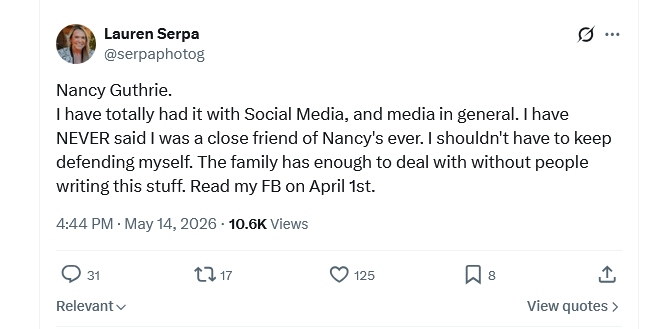
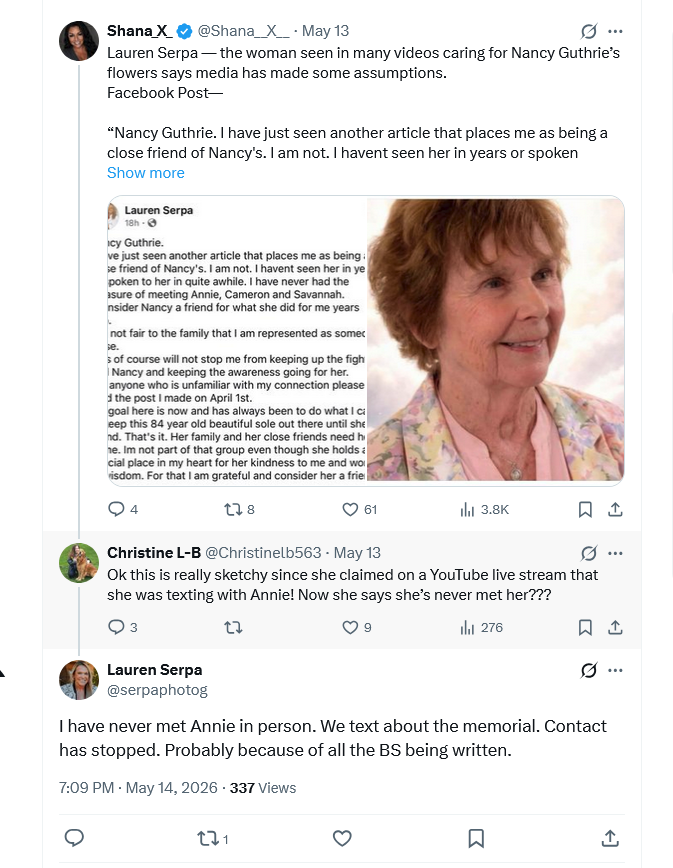
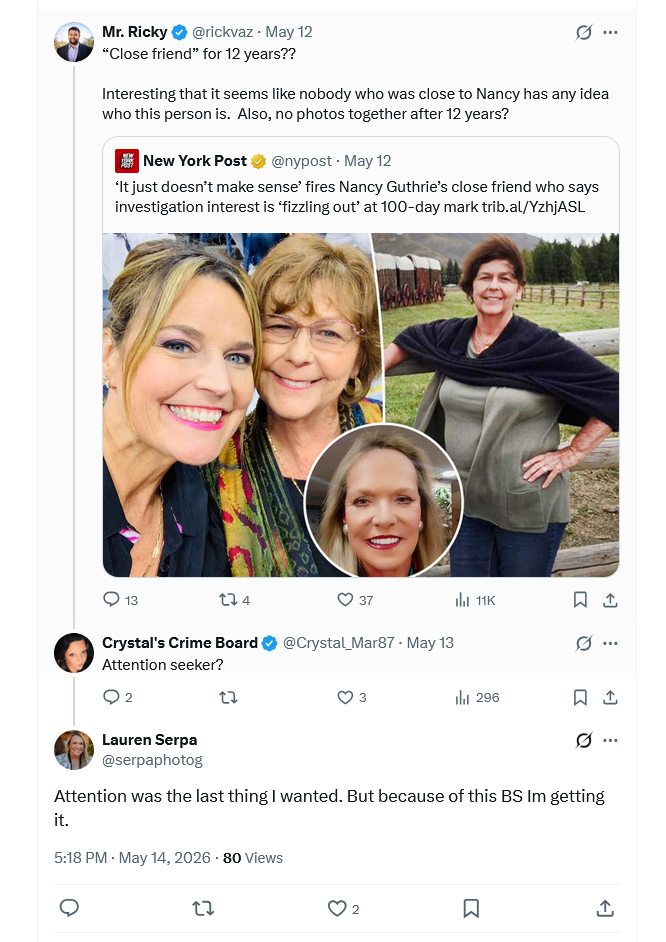
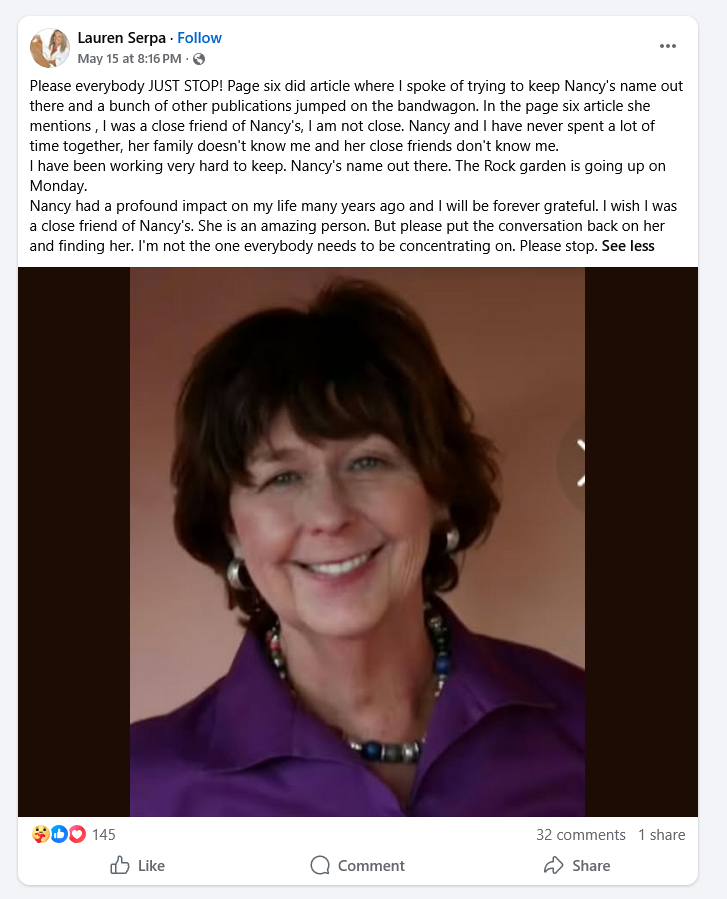
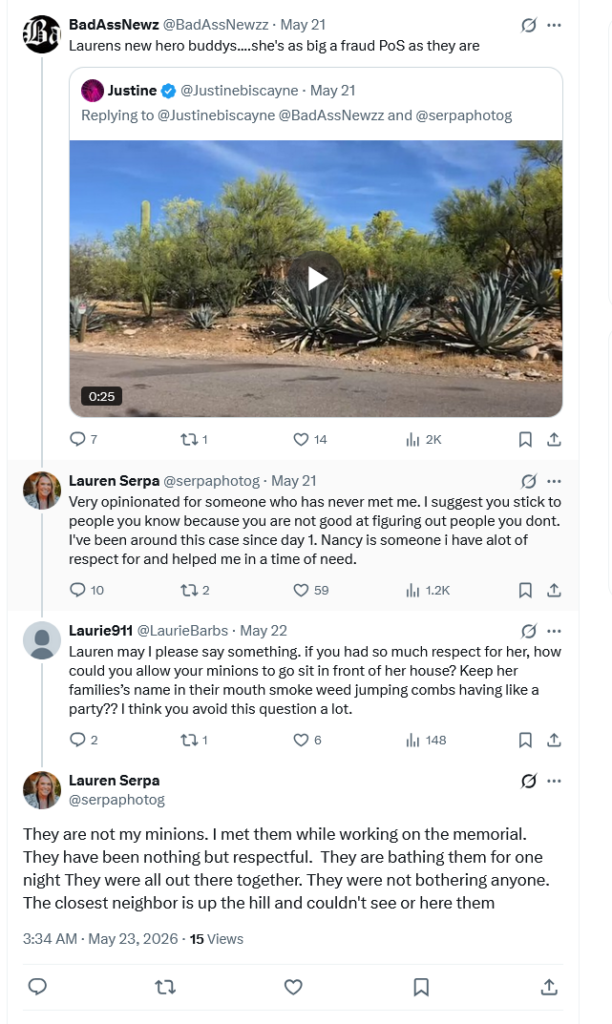
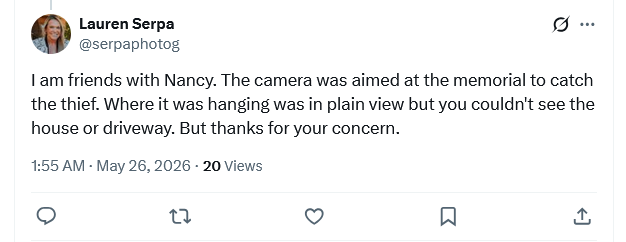
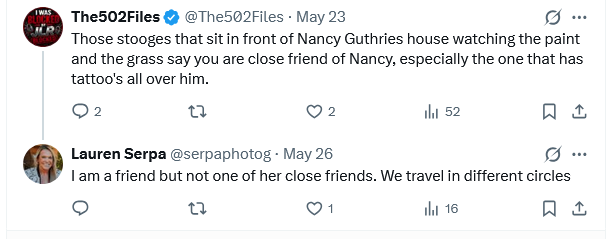
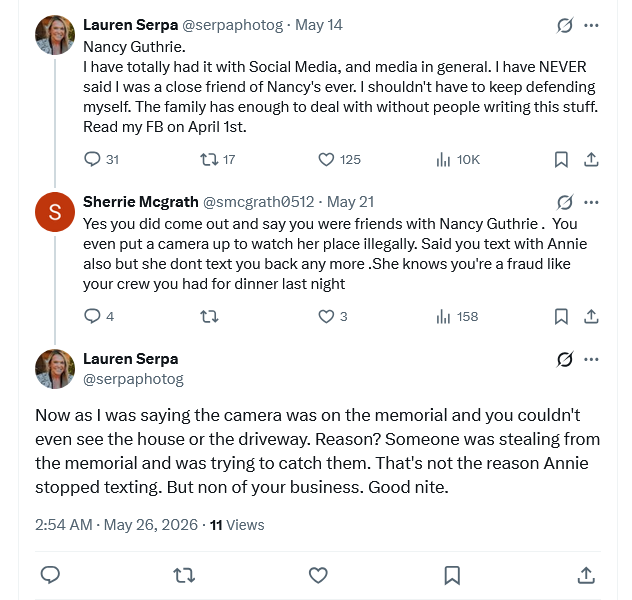
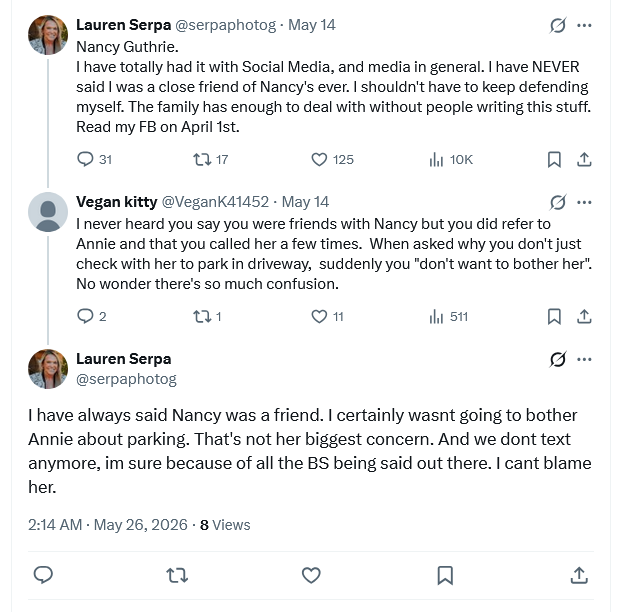
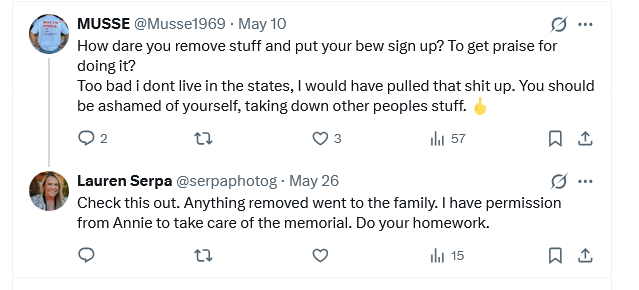
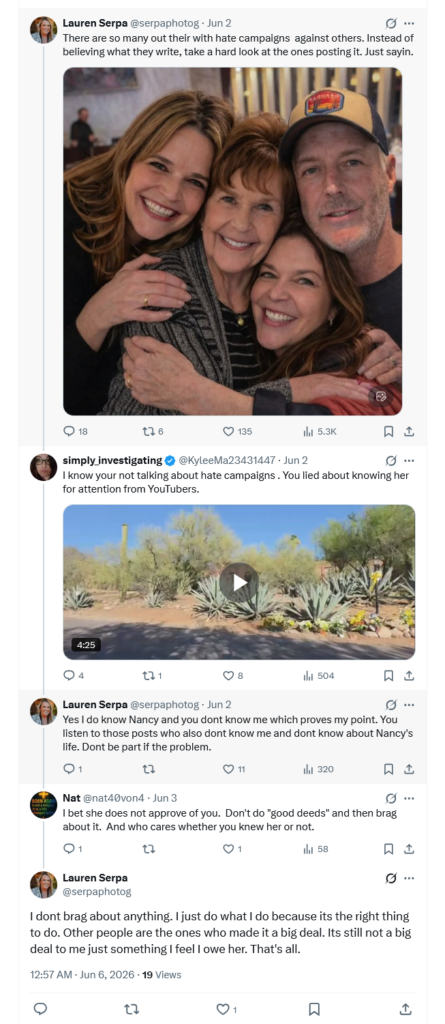
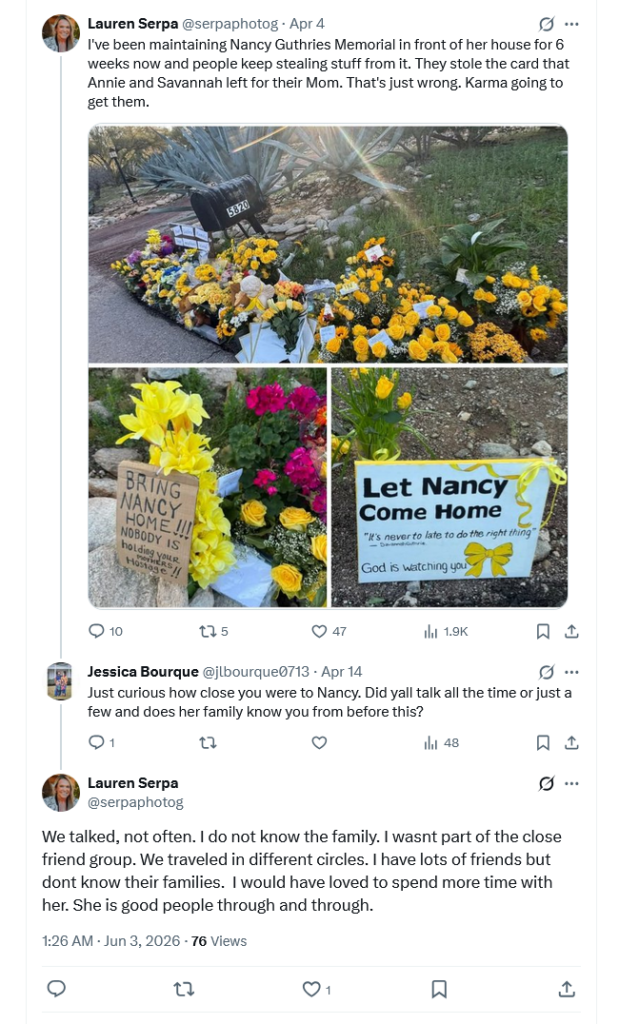
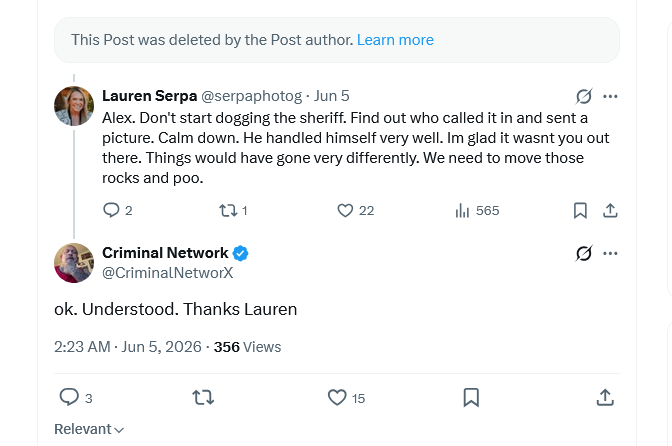

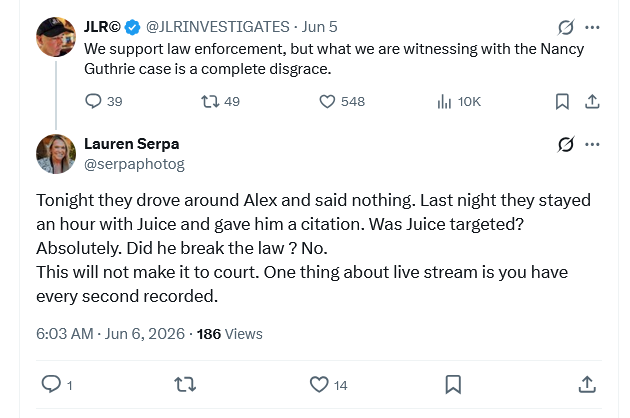
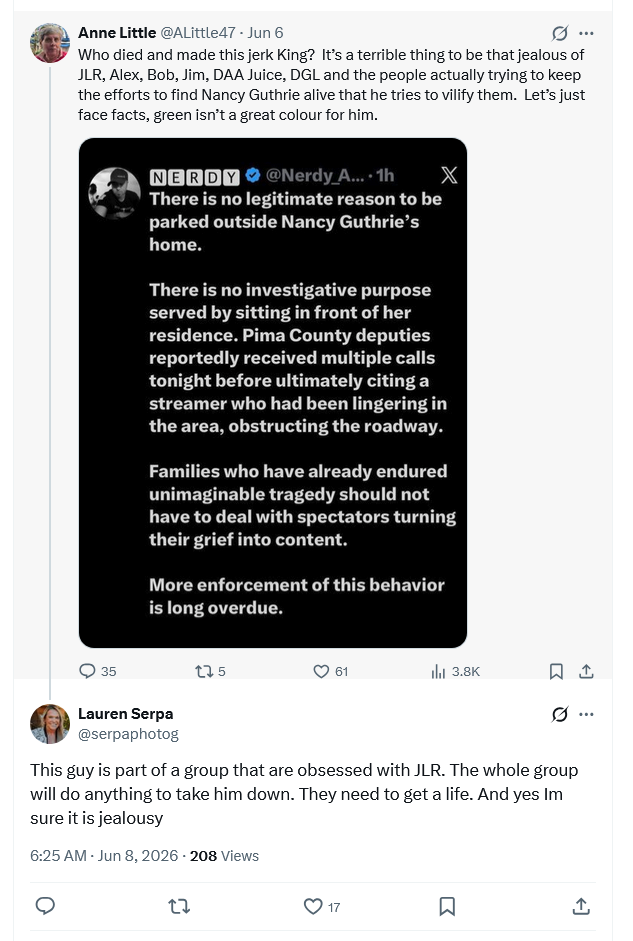
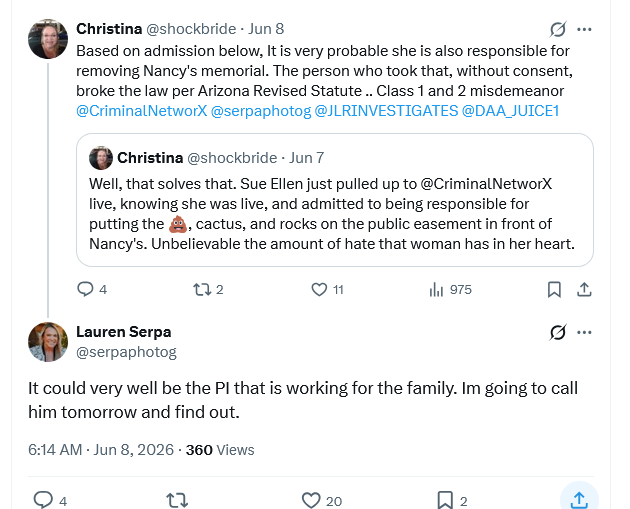
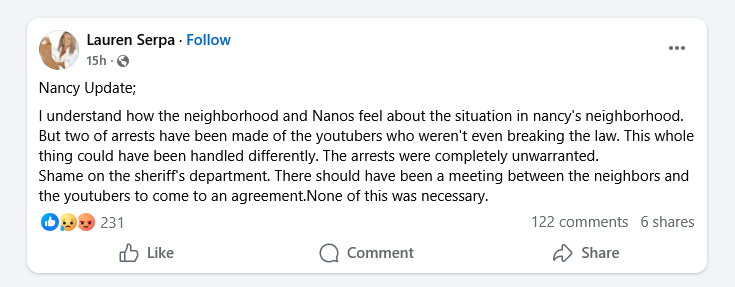
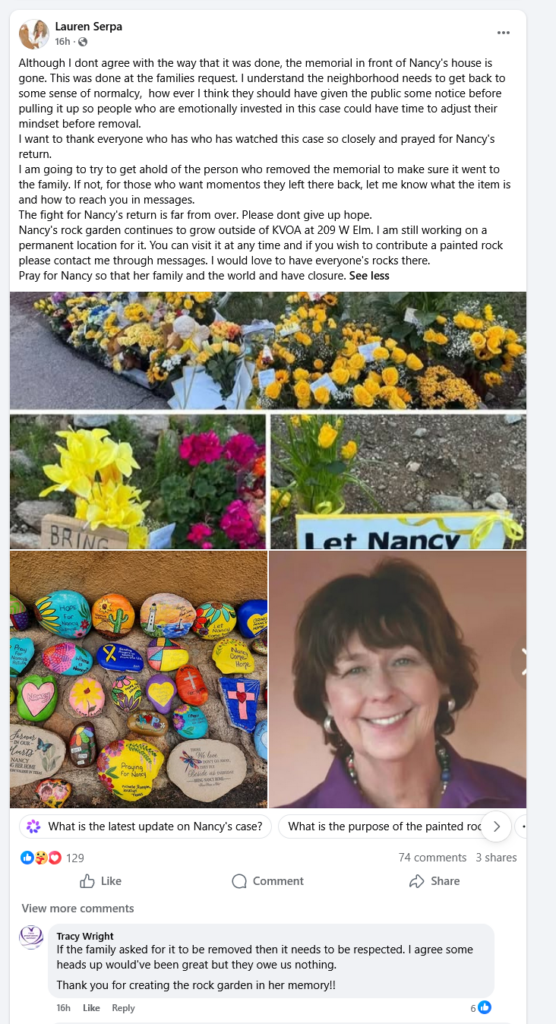
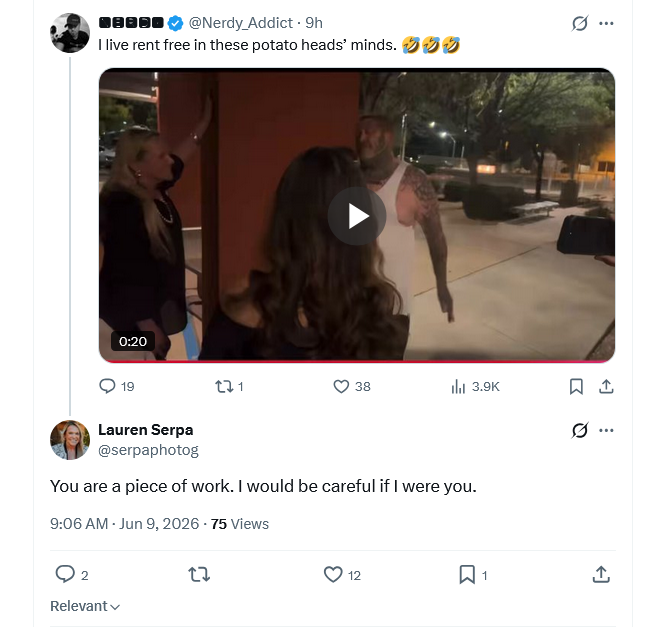
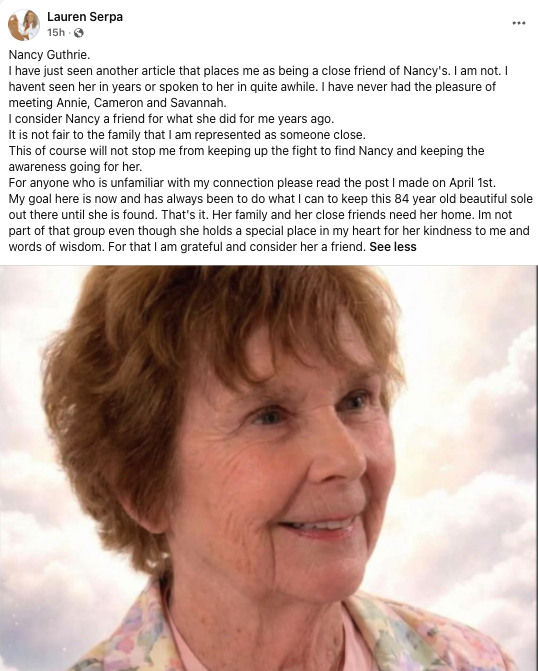
That is not clarity. That is a relationship being stretched and shrunk in real time. When the friendship makes her look credible, the friendship gets bigger. When the friendship makes her look like she overstepped, the friendship gets smaller. And maybe each sentence can be individually explained away if you isolate it, but taken together, they show the exact problem. The public was not confused by accident. The confusion came from Lauren’s own shifting descriptions of where she actually stood in Nancy’s life.
The same pattern appears with Nancy’s family. At different points, Lauren presents herself as someone acting with permission, someone texting Annie, someone handling the memorial, someone who can collect items from Nancy’s house, box them up, and get them to the Guthries. But then she also admits she has never met Annie, Cameron, or Savannah. She says she has never met the family. She says Nancy’s family does not know her. She says she is not part of that close circle. Those two versions cannot comfortably live in the same house.
Because you cannot be a trusted family contact when defending your role, and then become a distant acquaintance when explaining why the family should not be upset. You cannot stand beside a memorial as if you have authority over it, then tell people the family does not know you. You cannot keep using the word permission while also admitting contact stopped, Annie no longer responds, and you do not text anymore. Permission is not a magic word you get to carry forever because someone may have once been kind, polite, overwhelmed, or simply trying to survive the worst moment of their life without fighting every person who stepped into it.
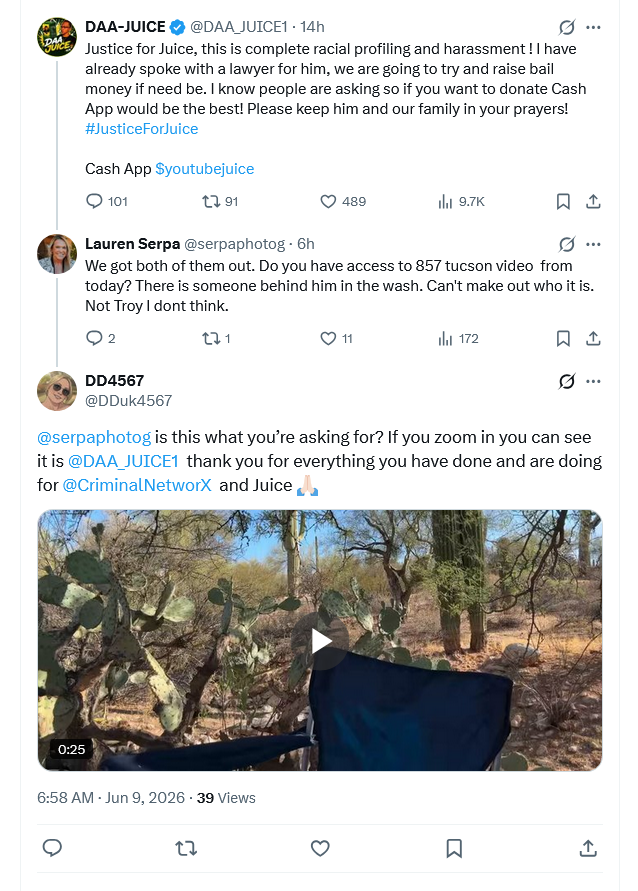
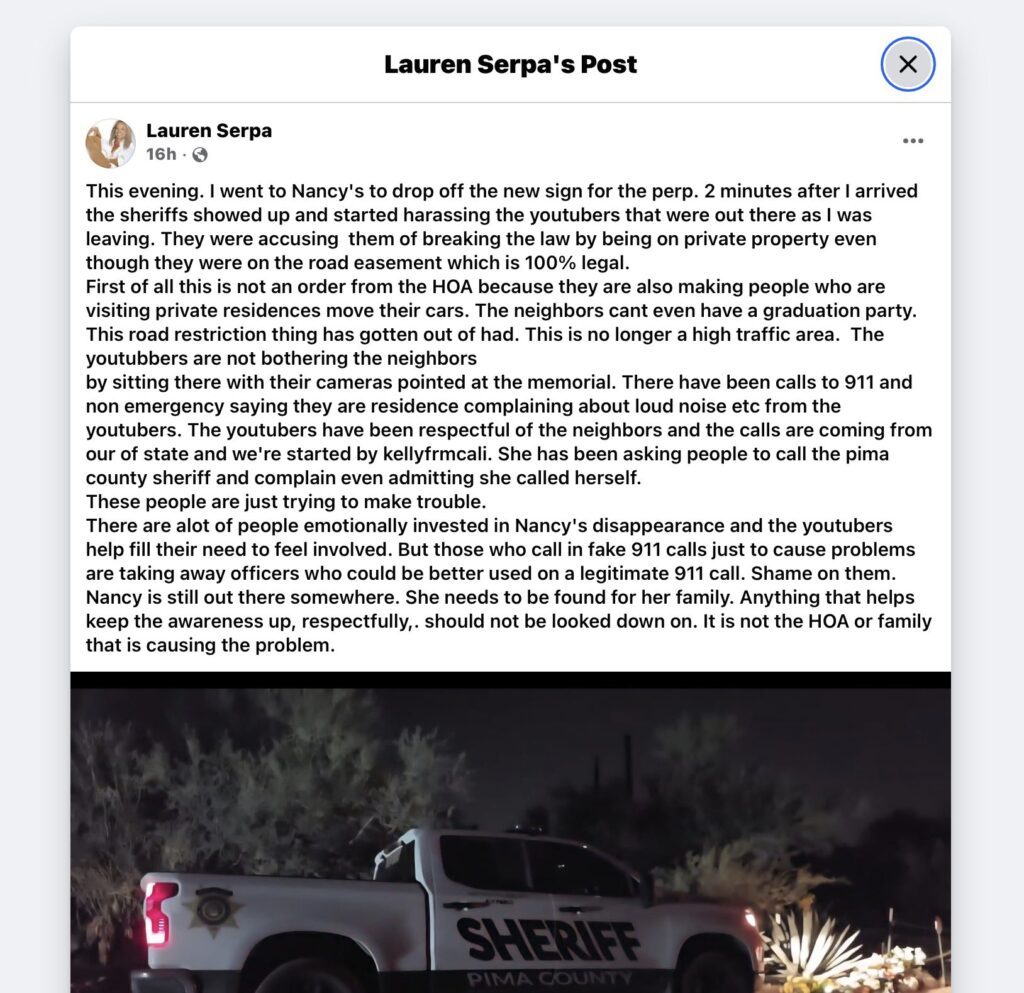
Then there is the YouTuber problem, which may be the clearest example of convenience replacing principle. Early on, Lauren had no problem telling the self proclaimed media crowd to go home. She said they were hampering the investigation. She said they were turning a serious case into a circus. She saw the cameras, the camping out, the spectacle, and she called it what it was. But once that same circus started orbiting her memorial, the language changed.
Suddenly, the same type of people sitting outside Nancy’s home with cameras pointed at the scene were not bothering anyone. Suddenly, arrests were unwarranted. Suddenly, there should have been some kind of meeting between the neighbors and the YouTubers.
Suddenly, they were crucial to keeping Nancy’s case alive. Suddenly, they were important enough to invite into her own home for dinner.
Suddenly, it was not her place to tell them what to do. But it was her place when she wanted them gone. That is the contradiction. When they were just streamers at Nancy’s house, they were a circus. When they became streamers around Lauren’s memorial, and then around Lauren herself, they became misunderstood advocates.
That is not principle. That is convenience. And it is hard to watch because Nancy’s actual family does not get to move around like that. They do not get to resize this tragedy depending on the comment section. They do not get to wake up one morning and decide that today the grief is smaller, today the cameras are useful, today the strangers on the street are harmless, today their mother’s disappearance hurts less.
They are stuck with the full weight of it every day, while other people get to decide how close they were, how involved they are, how much authority they have, how much attention is too much, and whether a front yard full of strangers is a circus or a community effort depending on who is standing closest to the camera. That is why the screenshots matter. They do not show one mistake. They show a pattern.
Friend, but not close. Always kept in touch, but not often. Permission from Annie, but Annie no longer responds. Not part of the family circle, but boxing things up for the family. YouTubers should go home, unless they become useful. Attention was the last thing she wanted, while her role kept getting bigger, louder, and more public.
Nancy Guthrie did not disappear so strangers could audition for importance in the aftermath. Her family did not lose their mother so someone else could discover a public identity inside the grief. And a kind twenty five minute conversation at a farmer’s market, no matter how meaningful it may have been, does not give anyone lifetime rights to stand between a missing woman and the people who actually knew her best.
I keep trying to find the version of this that makes sense. The charitable read. The one where there’s no contradiction because I’m missing something. And I can’t find it. Because the May 12th post is not ambiguous. She wrote that she is not a close friend. She wrote that she has not seen Nancy in years. She wrote that she has not spoken to her in quite a while. She wrote that she has never met the kids. She wrote that it is not fair to the family that she is represented as someone close.
She wrote all of that. After spending weeks being represented as someone close.
Either she understands she has no connection to the Guthrie family, in which case everything before May 12th was a performance of proximity she knew she didn’t have. Or she genuinely believes a twenty-five minute conversation at a farmer’s market in 2015 constitutes meaningful enough standing to curate information, amplify psychic speculation about where a woman’s body might be, appear in international publications as a grieving friend, and make sandwich board signs promising to serve as family liaison.
Neither option is flattering.
This matters because the sign is not the only thing. Over the past month, Serpa has been showing up in media coverage presented as someone close to Nancy. The Irish Star ran a piece headlined around her fondest memory of the missing woman. She was described as a friend and neighbor. She was given space to reflect on Nancy’s kindness, on Savannah’s return to the Today show, on whether Nancy is still alive. She’s definitely out there. Whether she’s alive, I don’t know. It can’t go on much longer. It’s not fair to the family.
She said that. About a family she has never met. To a publication with an international readership. On the record.
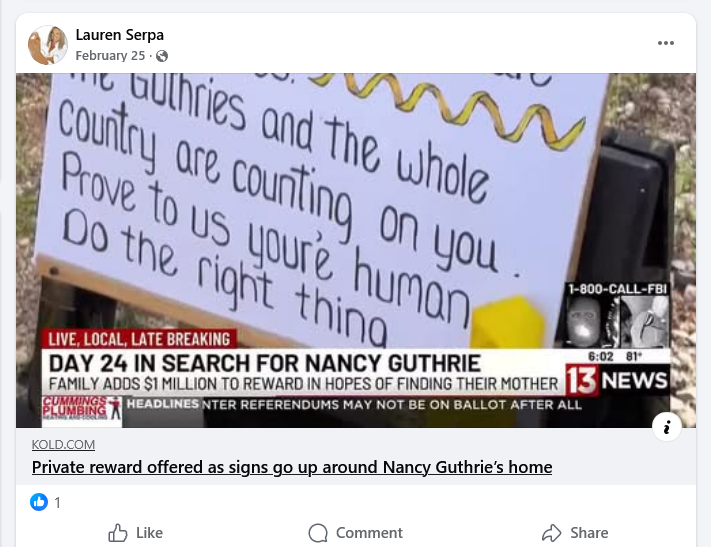
Which brings me to the signs left in front of Nancy’s house. Because the memorial sign is not the only one. Someone thought it was a good idea to put signs in front of Nancy Guthrie’s home. Her house. The house where her children may one day have to live again, or sell, or drive past on the way to somewhere else and feel the whole weight of what happened land on their chest in the span of a single block. Someone looked at that house, looked at a missing woman’s home, and thought: yard display. That’s the move.
What is the theory of change here, exactly? That whoever is responsible for Nancy’s disappearance drives by, clocks the sign, and feels something shift? That conscience is activated by lawn art? These are not rhetorical questions dressed up to seem rhetorical. I genuinely want to know what the plan was. Because no credible framework for public awareness or criminal investigation puts “emotionally targeted signage at the victim’s residence” anywhere near the list. People who commit serious crimes are not sitting around waiting for a homemade message to awaken their conscience. If they are following the case at all, they are far more likely to monitor media coverage and law enforcement updates than physically return to a scene to absorb emotional messaging.
Real advocacy is boring and specific and hard. It’s the tip line number shared accurately and often. It’s the timeline, the vehicle description, the surveillance still, the reward information. It’s the stuff that could actually reach the person sitting on something they don’t know is important. That stuff doesn’t need a face attached to it. That stuff doesn’t require anyone to be the person who cared loudest. That stuff definitely does not require amplifying a UK psychic’s vision of a lake with a rock and a rope.
The signs need a face.
What they also do is draw attention to the house. They keep Nancy’s private residence as a public attraction. They give strangers, content creators, and drama seekers a reason to show up. They turn a place connected to tragedy into a stage. And that is where this crosses the line from advocacy into something else entirely.
Serpa may have warm memories of Nancy. That’s real. That’s allowed. A woman told her to breathe once, at a farmer’s market, when she needed it. She carried that. That’s human. But warmth about a person you knew years ago does not make you a stakeholder in their tragedy. It does not entitle you to proximity to their family’s grief. It does not make it okay to appear in publications across multiple countries as a voice for a missing woman, to tell the public which sources to trust about an active FBI investigation, to suggest that federal agents should drag a specific lake because a medium said so, and then three weeks later post a clarification that actually you never knew her that well and have never spoken to any of her children.
Nancy Guthrie’s children are real. They are living inside something most of us can’t even approximate in our worst moments of imagining. Their mother was taken from her home in February. A masked, armed individual walked up to her porch on a Sunday morning. The FBI is offering a hundred thousand dollar reward. Savannah went back to work with a yellow ribbon pinned to her chest and tried to hold herself together on national television. And while her family carries all of that, someone who met their grandmother once at a farmer’s market eleven years ago spent weeks positioning herself as a reliable voice in the case, amplified a paranormal theory about the location of a body, and wrote a sign in the dark promising to deliver things to people she has never met.
Then, on May 12th, clarified that she was never actually close.
That’s not devotion.
That’s someone who has confused being emotionally invested in a story with being part of it. Awareness without boundaries becomes exploitation. Advocacy without humility becomes performance. And grief, when filtered through media appearances and handwritten signs in the dirt and psychic tips shared to thousands of followers, can quickly become less about the missing person and more about the person who needs you to know how much they care.
Nancy deserves better than that. Her family deserves better than that.
And the public deserves an honest accounting of who is actually close to this case, who is speaking for themselves, and who is using Nancy’s name to stay visible.